Did AI Kill Developers? No, Only the 'Coder' as We Knew Them Is Dead.
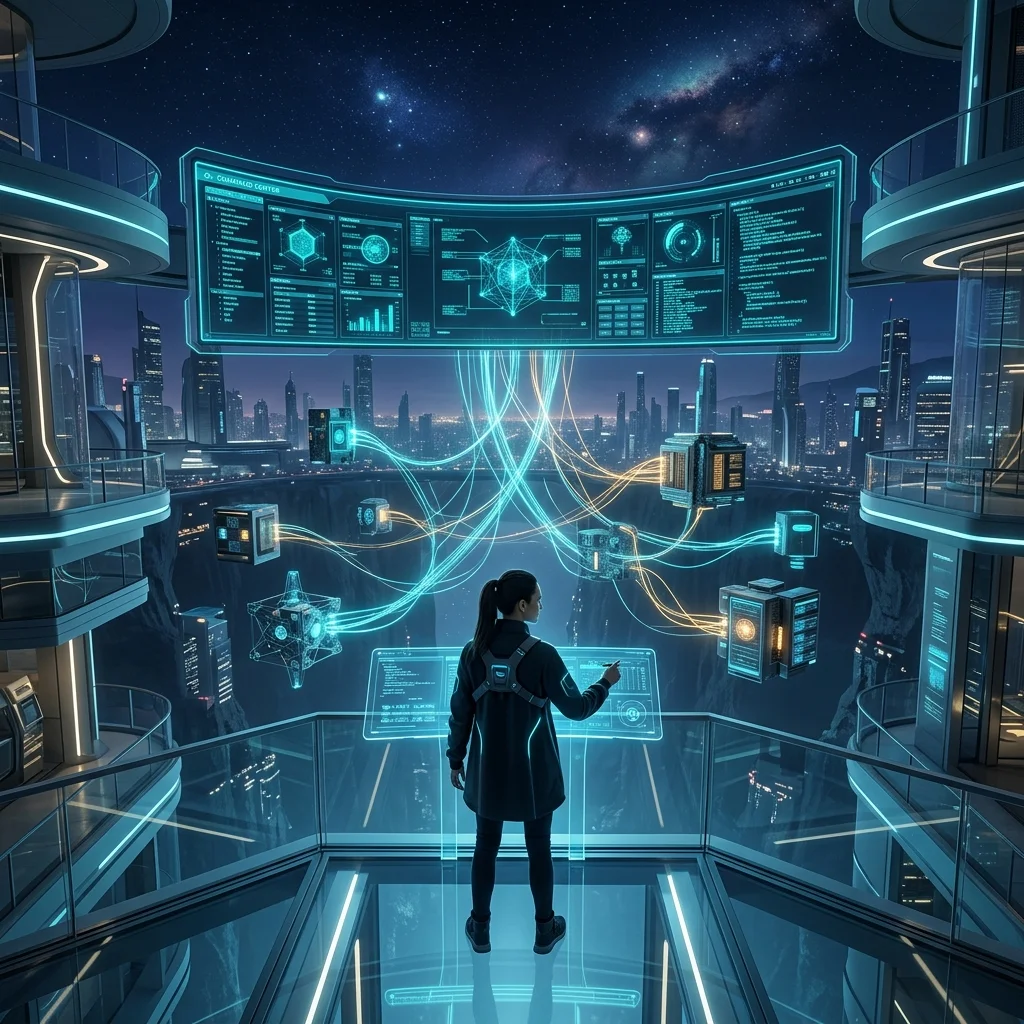
As someone who believes that the power of AI engines and LLMs makes experts more useful and valuable, I can say with confidence: the era of the 'traditional developer' we have known for decades is over.
'Coders' who simply converted requirements into code according to syntax are no longer needed. AI turns out code 100 times faster, without bathroom breaks or sleep. This might sound like terrifying news, but it is actually the exact opposite.
The End of the Traditional 'Coder'
In the past, memorizing and typing the syntax of a specific language—be it Ruby on Rails or React—was a 'skill' in itself. But no longer. Based on my recent experience, the measure of coding proficiency has shifted from "how many APIs do you know?" to "how complex of a system can you visualize in your head?"
Code syntax can now be fully delegated to AI. That said, this does not mean the value of a developer has diminished. On the contrary, we can finally focus on the real problems we should be solving: architecture and business logic design.
AI Won't Replace You, But the Developer Using AI Will
Through numerous projects, I have realized by leveraging AI that it isn't a self-driving car—it’s a turbo booster that amplifies your engine tenfold. Depending on who is in the driver’s seat, that car can navigate the track perfectly or crash into a wall.
We all know that AI-generated code isn't always correct. The role of the 'Orchestrator'—the one who verifies and coordinates that code within the context of the entire system—has become more critical than ever. Just as a bestselling author with research assistants writes more books, a developer must now become a lead engineer commanding a fleet of AI agents.
The Three Waves We've Crossed
Looking back, since 2022, we have experienced three paradigm shifts at a dizzying pace.
The first was Prompt Engineering. This was a time when everything depended on how you asked questions. We poured all our energy into refining instructions, inducing Chains of Thought, and getting AI to spit out the format we wanted. It was literally a stage of learning 'how to talk' properly.
Next came Context Engineering. The core shifted to what data and context (like RAG) we fed to the AI. This involved searching for and providing the latest info or internal data that the AI hadn't learned, creating a 'context' fence so the AI wouldn't hallucinate. From this point, developers assumed the role of 'Knowledge Managers' beyond simple coders.
Now, in 2026, the frontier we stand on is Harness Engineering. We no longer beg AI to write code. Instead, we verify the tool calls performed by AI, design collaborative frameworks between multiple AI agents, and build perfect control systems to ensure the final output has software-level reliability. The core is the design ability to put a 'harness' on the wild stallion of AI and steer it precisely in the direction we want.
The Shift of Tools: From Coding to Design
This is a game-changer. A developer's daily routine should be filled with conversing with AI, verifying logic, and contemplating structures, rather than tapping on a keyboard.
For example, beyond the era of GitHub Copilot which simply recommended code snippets, AI-native IDEs like Cursor or Windsurf are now the standard. They perfectly understand the code's context and refactor hundreds of lines in one go according to the engineer's intent. In the terminal, Warp assembles complex commands, and Raycast AI allows us to adjust every workflow on our laptops through voice or simple typing.
The fundamental difference here is that we are no longer masons laying bricks, but architects commanding these powerful tools to build entire buildings.
Imagination and Verification Intelligence: The Engineer's New North Star
The limit of software is no longer human typing speed, but the scale of the engineer's imagination. Ideas that were abandoned in the past due to lack of implementation skills are now becoming reality through the powerful engine of AI.
However, there is something vital to remember. Imagination alone is not enough. The true power of a 2026 developer lies in Verification Intelligence—the ability to find and fix a single fatal logical flaw among tens of thousands of lines of code spewed by AI.
Those who blindly trust AI's output will be obsolete. Those who coldly audit and tune AI's deliverables will be irreplaceable. We must evolve from "someone who writes code well" to "someone who can perfectly approve code."
Become the Architect Who Designs the Harness
Ultimately, the goal we must reach is clear. Don't waste time optimizing individual functions. Instead, become a 'Harness Architect' who designs a system where AI agents can run free while never straying off the guardrails.
Design your own automation workflows and build systems that automatically verify the reliability of the code AI produces. The most powerful portfolio in 2026 isn't tens of thousands of lines of source code, but your own 'control system' that commands AI to pull off a perfect product in just a few hours.
Conclusion: The Developer We Knew Is Dead, but a New Era Has Begun
We weren't killed by technology. We simply shed our old skins to move toward more noble and creative domains. It’s time to face the 'essence of problem-solving' again, which was once obscured by the sound of typing.
The traditional developer is dead. But the era of the 'New Engineer,' who has gained the authority to redesign the world atop the storm of AI, has just begun.
Don't be driven by tools—command them. I sincerely hope you define this incredible era where your imagination becomes technology in your own unique way.
Need Help from NexusForce Experts?
Combine expert insights with AI and start your business transformation today.
If you are planning to introduce AI systems or integrate data related to this blog, get the most objective and accurate diagnosis. Check your free AI estimate in just 3 minutes.